2010年1月5日 星期二

The defining feature of 2010 will be…

Reverse repos.

That’s according to Morgan Stanley’s chief European strategist Teun Draaisma, who reckons the moment the Fed starts to drain excess reserves from the system will be the point at which a 10 per cent equity market correction begins.

Now, the New York Fed conducted its first test of reverse repurchase agreements — selling assets such as Treasuries to dealers for cash with an agreement to buy them back later at a slightly higher price — last month.

And Draaisma thinks the Fed will go live in March, at which point it will be time to put on the tin hat and rotate into defensive stocks:

There always is some sort of equity market correction around the start of tightening post US recessions. The average such correction has been 13% over 6 months, typically starting around the first Fed rate hike, sometimes earlier (such as in 1976 & 2004). In the aftermath of secular bear markets, the start of tightening leads to an even more severe and longer correction.

This time around, we expect this period of market weakness will start around the time of the start of liquidity withdrawal early in H1 rather than around the first Fed rate hike in H2.

Here is all of that pictorially (click to enlarge):

Equity corrections after Fed rate hikes - small

And this is how Draaisma is positioning himself for this equity market squall.

We are increasing Staples from +2 to +3% OW, Healthcare from +1 to +2% OW; Consumer Discretionary from -2 to -1% UW; reducing Materials from +2% OW to neutral; Financials from -2 to -3% UW by lowering Banks from -1 to – 2% UW (Financials tend to suffer during ‘start of tightening’ phases). After these changes, we are playing our themes of reliable growth / inflation hedges / start of tightening through: OW Energy +3, Consumer Staples +3, Health care +2; Neutral Industrials, Materials, Telcos; UW Tech -1, Consumer Discretionary -1, Financials -3, Utilities -3.

Related links:
[Outlook 2010] The deluge begins – FT Alphaville
The interest rate disconnect - FT Alphaville
Reversing the repo constraint – FT Money Supply

Consolidating the US, UK gov’t bond sell-off

With the holiday season finally over, it’s probably a good time to contemplate the period’s more excessive and illiquid market moves. Among them the rather sudden and acute sell-off in US and UK government bonds. Was it rational?

As the following charts depict, British government bonds ended 2009 with their worst monthly performance since the start of the year.

US Treasury notes, the 10-year yields of which were approaching their highest level since June on Monday, registered the worst sovereign debt performance of 2009 according to Bloomberg:

US 10-year Treasuries - Bloomberg

10-year Gilts - Bloomberg

As far as the UK is concerned, even upbeat manufacturing and lending data was unable to reverse the sell-off in any decisive fashion on Monday. As Reuters reported:

LONDON, Jan 4 (Reuters) – British gilt prices were little changed on Monday despite upbeat manufacturing and lending data as investors assessed the sustainability of sharp price falls during thin trading over the Christmas period. At 1247 GMT the March long gilt future was flat at 114.45 in thin trade on the first trading day of 2010, when most dealers were back after two weeks of thin markets due to the Christmas and New Year holidays.

Meanwhile, Pacific Investment Management, aka bond-fund Pimco, fuelled further jitters after announcing it was planning to cut its holdings of US and UK debt due to the countries’ record borrowing levels.

According to Bloomberg:

Pimco is “more cautious” on corporate bonds and holds fewer mortgage-backed securities than the percentages in the benchmarks it uses to gauge performance, wrote Paul McCulley, a portfolio manager and member of the investment committee, in his 2010 outlook.

The company is also underweight Treasury Inflation Protected Securities, according to the report on Newport Beach, California-based Pimco’s Web site. “This all leaves us with portfolios that appear, more than at other times, to be hugging the benchmarks with no bold positioning,” McCulley wrote. “We’re making a very active decision to run light on risk.”

Which presumably suggests the bond sell-off was justifiable after all?

Related links:
After the decade of debt: A course to chart
- FT
Our wall of gilts is casting a long shadow over 2010
- FT

Citi sells its electronic FX platform

There’s been some consolidation in the world of FX electronic trading platforms on Monday.

According to a statement released by foreign-exchange platform FXall, Citigroup has reached an agreement with the company to sell it its LavaFX foreign-exchange electronic trading platform for an undisclosed sum.

The statement reads:

4 January 2010 – FXall, the world’s leading institutional multi-bank electronic foreign exchange platform, today announced an agreement to purchase LavaFX from Citi. The acquisition is the latest addition to FXall’s offering as it continues its long established program of investment to create the best platform for clients. With LavaFX, FXall grows its institutional client base to nearly 1,000 of the world’s largest hedge funds, CTAs, banks, broker-dealers, corporate treasurers and asset managers and adds capabilities to give clients an edge at every phase of the transaction lifecycle.

Citigroup had invested in developing cutting-edge algorithmic order processing optionality for LavaFX, including the ability to timeslice orders and dictate market conditions for order placement.

It had also hoped the product would successfully break into the interbank market — to date dominated by Reuters and EBS.

According to a 2004 Lava press release, the group launched its FX arm in October of that year, hoping to revolutionise electronic global currency trading.

So what prompted Monday’s deal?

From Citi’s perspective, it already has a successful equity and derivative-focused ECN in the form of Lava Trading. Accordingly, selling off LavaFX won’t see Citi lose out on the overall algorithmic flow game.

What’s more, as Citi’s Jeff Feig, global head of G10 foreign exchange notes in the press release (our emphasis):

Jeff Feig, Global Head of G10 Foreign Exchange at Citi, added: “LavaFX is an innovative force in the industry, having built an excellent platform with talented staff. Citi believes a multi-bank platform is best owned by a multi-bank provider, making the sale of LavaFX to FXall the right strategy for its continued growth. As a shareholder and long standing liquidity provider to FXall, Citi is confident LavaFX clients and employees will benefit from this transaction. Citi will continue to support LavaFX and contribute to its future success as a part of FXall.”

In other words, it looks like the move is designed to support FXall’s general bid to dismantle Reuters and EBS from their interbank dominance.

Rather than competing with FXall on flow, Citi is perhaps opting to support the multi-bank-owned endeavour with the sort of liquidity (not just surplus flow that it itself cannot offset) that could very well make a difference in who eventually wins out.

FXall today is owned by 16 banks including Citi, having been formed back in 2000 by seven founding participants.

Interestingly, Citi was previously part of the consortium of 13 banks that sold EBS to Icap in 2006.

Related links:
FXall to buy forex platform from Citi
– FT
FX is changing
- FT Alphaville

2010年1月4日 星期一

Japan's two lost decades - An end to the Japanese lesson

Dec 30th 2009
From The Economist print edition

Japan has taught the world a great deal about coping with the financial crisis. Now the West is on its own

Illustration by S. Kambayashi

“NEW Year rally expected on Tokyo market next week.” That was a typically boosterish Japanese newswire headline on December 29th 1989, the day that one of the world’s biggest ever asset-price bubbles reached bursting point. Exactly 20 years later the Japanese are still paying the price for such hubris (see article). The Nikkei 225 index, which peaked at 38,916, now languishes at just over one-quarter of that level (though once again there is talk of a New Year rally). Japan’s economy has barely grown in nominal terms after two “lost decades”, and is again suffering from deflation. Where Japan was once bearing down on America, it now feels the hot breath of China on its neck. Remember “Japan as Number One”? These days the country’s chief claim to fame is having a gross government debt burden approaching 200% of GDP.

For the Japanese this has all been deeply troubling. But in the past two years, as the Western world has faced many of the same problems that Japan has been grappling with since 1989 (the collapse of asset prices, a surge in distressed debt and a looming threat of deflation), Japan has provided some useful lessons on how governments should, and should not, tackle potentially systemic financial meltdowns.

Thanks to the precedent set by Japan, many of these lessons were quickly put into practice. Acting far more swiftly than the Japanese authorities did (the Japanese had the misfortune of having to learn through trial and error), Western policymakers provided liquidity to their banks and forced them to rebuild capital, while pumping in generous doses of fiscal stimulus to offset the collapse in private-sector demand. And like the Bank of Japan, they slashed interest rates and took extraordinary measures to try to keep credit flowing. The efficacy of these steps has led to growing optimism about the world economy.

So what is the Japanese lesson now? In many ways, the analogy is no longer terribly helpful. That is partly because the pupils are in a worse pickle than the teacher ever was. The most vulnerable countries, such as Greece, now face a risk that Japan never did: that markets will lose faith in their creditworthiness. Japan, for all its woes, has benefited from a huge pool of domestic savings and investors happier to keep their money at home than abroad. Meanwhile, the scale of the global upheaval makes Japan’s problems, which had little impact overseas and took place against a backdrop of global growth, look small by comparison. And with huge deficits in so many nations, the risk of a sudden loss of fiscal credibility is more acute than it ever was in Japan.

But there are other ways in which the pupils are in better shape. That is partly because they have less rigid systems. In the more adaptable Western economies there has been less resistance to structural changes in order to maintain productivity. There are also usually fewer political barriers to dealing with bad private-sector debts than there were in Japan. Moreover Westerners are also reaping the rewards of having acted more decisively than the Japanese did—especially when it came to pumping money into the economy and cleaning up financial balance-sheets. With fewer zombie banks, fewer signs of entrenched deflation and much earlier signs of growth, the West is in uncharted territory: it has arguably already got to a stage that Japan never really did.

Nothing more will I teach you today

That makes it very difficult to keep on drawing particular lessons from Japan’s sad plight. It does, however, still leave a general lesson common to all economic disasters: don’t be suckered by false signs of economic recovery. In Japan’s case, such hopes have led it repeatedly to tighten fiscal policy before private demand was strong enough to sustain a recovery. That entrenched deflation. Japan also left its banks too short of capital to cope with subsequent shocks.

Policymakers in the developed world still have an enormous task on their hands. Many banks have huge write-downs to make on their loans, economies are burdened with excess capacity and households’ debt levels remain high. It would be disastrous to tighten policy too soon, as Japan’s example shows. But Japan provides no useful guidance on when the right time would be. For that, there is only trial and error. And the more errors there are, the more the West’s next decade may look like Japan’s two lost ones.

2009年12月22日 星期二

The CDO unwind waiting to happen

Posted by Sam Jones on Oct 23 14:46.
http://ftalphaville.ft.com/blog/2008/10/23/17365/the-cdo-unwind-waiting-to-happen/

Are the days of CDO carnage behind us?
Apparently not. Bloomberg reported on Wednesday:
Oct. 22 (Bloomberg) — Investors are taking losses of up to 90 percent in the $1.2 trillion market for collateralized debt obligations tied to corporate credit as the failures of Lehman Brothers Holdings Inc. and Icelandic banks send shockwaves through the global financial system.
The article is referring to synthetic CDOs: that is, CDOs which are not backed by tangible collateral (RMBS, CMBS, for example) but CDS contracts which reference some form of collateral.
In this case, CDS on corporations.
All of which may sound dreadfully esoteric. Until you ratchet up the numbers. On Friday last week, Barclays analyst Puneet Sharma put out a report on a possible synthetic CDO unwind, and what can be expected to happen to the market as we move through a recession in the coming months.
In graph form, here’s what would happen to the ratings on prime and high-grade tranches of the trillion dollar synthetic CDO market:
Huge, disastrous downgrades: exactly mirroring the structured finance downgrades from ABS CDOs which have brought the financial system to its knees already. Don’t forget, moreover, that these CDOs aren’t backed by dodgy subprime collateral, but are supposed to reference the investment grade corporate world. More proof that it’s not the collateral which is to blame, but the structuring. The medium is the message, and all that.
We guess the impact of this might make itself felt in three ways:
Firstly, there will likely be the mark-to-market losses on the CDO notes themselves. As the Bloomberg article noted, in some cases this is equivalent to a 90 per cent loss on capital. The question here then, is who is holding these notes? Hedge funds were certainly big buyers of synthetic CDOs. But guess what – banks are also holders too. And by and large, banks synthetic corporate CDO holdings haven’t been written down.
Secondly, trouble in the synthetic CDO market will – just as with ABS CDOs – have huge regulatory capital impacts for banks. Shama at Barclays produces another set of graphs to demonstrate:
Downgrades of synthetic CDOs, in other words, will have a devastating caustic effect on banks’ capital ratios – with the potential to completely offset government recapitalisation actions.
Thirdly – crisis for synthetic CDOs will suck money out of the banking system in other ways. Synthetics are “unfunded”. In a normal asset-backed CDO, the cash raised from selling bonds is used to buy assets, but in a synthetic CDO, the cash raised from selling bonds is not used up front: as a protection seller, the CDO collects premiums on CDS contracts which only cost it money in the event of a default (when the CDO must make good on its protection). Of course, depending on what is happening to the spread on the various CDS contracts a synthetic CDO might hold, the CDO might also need to make margin calls. Here is a quick diagram of the generic structure:
The point here is that the “collateral” account of synthetic CDOs usually takes one of two forms: a bank deposit, or a similar cash-equivalent holding: a money market deposit, for example. As spreads widen, and collateral posting (the red line in this diagram) comes into force, synthetic CDO SPVs will be drawing money out of banks and money market funds to meet their obligations. Given that there are quite a few synthetic CDOs out there, the effect shouldn’t be too insignificant.______
There’s one other point too: synthetic CDOs almost always have a super senior swap written on them. You can see it in the above diagram, technically sitting “outside” – above – the structure. The swap effectively offers the arranging bank protection against its position. The question is, who writes these swaps? LSS conduits, for one (another layer of SPV fun – backed by CP), insurers do (monolines and AIG, for example) and other banks do.
Complicated all the above might be. The long and the short of it is that the synthetic CDO market has used derivative technology to build a huge amount of leverage. With recession now biting, the whole house of cards is dangerously close to collapse.
The CDS markets should feel the impact when it does. One way synthetic CDO managers can offset losses- or rather, crystalise them at acceptable levels – would be to buy protection in the market to sterilise their portfolios.

S&P’s CDO rating methodology is unpatriotic, outrage du jour

Posted by Tracy Alloway on Oct 07 16:47.

Here’s a vitriolic demonstration of the current dilemma facing the ratings agencies.
Having been accused of ratings puffery — not being realistic or pessimistic enough when they first evaluated structured assets like collateralised debt obligations – the agencies are now being accused of being too bearish. To wit: the latest HCM Market Letter’s comments on Standard & Poor’s (H/T Sam Jones).
First, a bit of background:
On Sept. 17, S&P published a revised methodology for CDOs — the slice and dice securitisations backed by mortgages or other debt – after having flagged its revision proposal since at least March. The rating agency said the new methodology would affect nearly 5,000 deals, mostly based on corporate loans and worth about $578bn. Outstanding synthetic CDOs would likely get a downgrade of four notches, S&P said at the time. The upside was that CDOs which received triple-A ratings under the new criteria had to be able to withstand Depression era-esque default rates.
A fair trade-off? Not according to some commentators.
Here are the relevant excerpts from that HCM letter (emphasis ours):With this announcement, S&P accomplished several things. First, the revisions constitute an admission that its prior ratings were based on profoundly flawed intellectual assumptions and ratings models. Unfortunately, they have replaced their original mistakes with equally serious ones. Second — and most important from a systemic standpoint — the revisions effectively hammer the final nails into the coffin of the securitization of corporate debt. Third, with these revisions S&P unilaterally changed the rules governing hundreds of billions of dollars of Collateralized Loan Obligations that were issued over the past few years. It did so without giving investors in these transactions any right of appeal, or any recourse to recover their potential losses. Investments were made based on earlier ratings which arguably constituted an implied promise by the ratings agencies to maintain the original set of assumptions underlying their ratings. By unilaterally changing these assumptions to account for the first time for Black Swans, S&P has broken its compact with the entire financial world that came to rely on its ratings. This post hoc approach reflects extremely poorly on the intellectual abilities of the credit rating agency.
Err, ouch.
If that wasn’t enough, though, HCM are also accusing S&P of being ignorant of the current economic environment:Fifth, S&P is effectively raising the cost of capital for less than investment grade companies that are already suffering from a dearth of available capital sources. Moreover, it is doing so after credit conditions have improved. While the rating agency is a private sector entity, it has enjoyed the imprimatur of the Securities and Exchange Commission that requires so many areas of finance to rely on its ratings. Moves like this, which are dressed up in intellectual clothing but are little more than ex post facto attempts to correct its prior mistakes, have large systemic effects. The problem is that these systemic effects are being inflicted by an organization that has surrendered any claim to intellectual legitimacy by its prior errors. Moreover, it is compounding those errors by making changes to its ratings assumptions that fly in the face of current data that suggests that corporate credit conditions are improving, rendering its heightened default scenarios highly unlikely to occur and unsuitable for application to these structured credit products.
And what’s more, S&P’s actions pose wider problems for collateralised loan obligations — a type of CDO which securitises commercial loans:The tragedy is that S&P’s recent move suggests that they are being permitted to stick it to investors again. The rating agencies fail to understand that corporate loans are different from bonds or mortgages. Instead, they are applying the same standards they erroneously applied to Collateralized Mortgage Obligations and Collateralized Bond Obligations to Collateralized Loan Obligations. As a result, they are downgrading CLOs and limiting their ability to provide capital to less than investment grade companies in an already difficult financing environment. They are doing this without regard to the consequences of their actions, which is to render financing harder to come by for viable companies that need access to capital. Despite improved credit conditions, less-than-investment grade companies remain faced with the same situation that they have always faced, i.e., the rationing of credit. Banks long ago exited the lending business in favor of the originate-and-distribute model, and in the aftermath of the crisis have little desire to add assets to their balance sheets. As Chart 1 on the previous page illustrates so graphically, the banks are still in the process of exiting the lending business and nobody appears to be filling the gap. One of the last men standing to purchase less-than-investment grade securities in large volumes were CLOs, and an increasing number of these are being frozen out of the market by these downgrades just as market conditions are improving. This is directly contrary to the efforts the Obama Administration is making to encourage lending, and is another reason why credit agencies should be subject to far stricter regulation in view of the damage they have already done and continue to do.
Woah — downgrading CDOs/CLOs is now unpatriotic and against Obamanomics?
Evil ratings agencies. Perhaps we can have a McCarthy-style witch hunt to purge them of their new-found realism bearishness soon.
Or maybe just another ratings flip-flop.
Related links:Hedgie adventures in pop history; hyperbole. Redux – The Long RoomCDOs, a tendency to liquidate – FT Alphaville`Race to bottom’ at Moody’s, S&P secured subprime’s boom, bust – Bloomberg

As Currencies Collapse, What Do You Do?

By a continuing process of inflation, government can confiscate, secretly and unobserved, an important part of the wealth of their citizens." - John Maynard Keynes

For the record, I believe John Maynard Keynes is one of the top-ten most evil human beings ever to have walked the earth, but I am thrilled to see that he at least admitted his theories amount to no more than legalized theft. And I know many of you will point out that I have used this quote several times in the last year. And it may trouble you to know I’ll probably continue to use it now and then, just to remind the Keynesians of the world that even the author of the theories they hold so dear considered them to be immoral. Of course, I’m presuming Keynes believed theft is immoral. I never spoke to him. So I can’t say for sure.

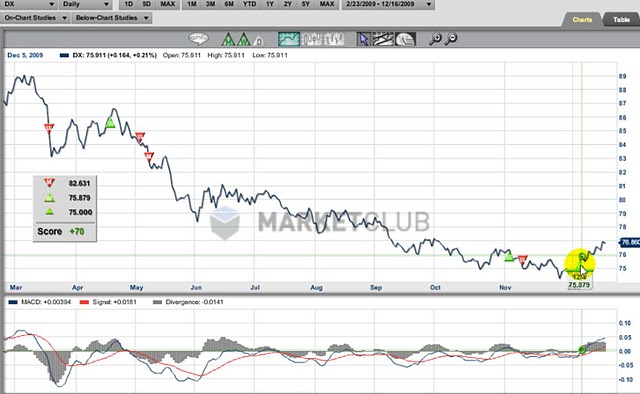
In the last several trading days, I've been watching the dollar strengthen, which, if you've been reading my articles, doesn't make a lot of sense -- at least not on the surface. The Fed (and every other major central bank) is creating currency and easing credit more than ever in history, and that, by definition, is inflationary. Remember what I’ve said so many times: inflation is not defined as rising prices; inflation is an increase in the amount of currency and credit available. Rising prices result from inflation. So if there are more dollars in the economy right now than ever before in history, shouldn't prices be rising? Further, as long-term Treasury yields increase -- as they have been over the last year -- doesn't this offer further evidence that rates are on an upward trend? And if they are going higher, as the cost of borrowing increases, won’t that cause hurdle rates to move higher, as well? (A hurdle rate is the rate at which managers and/or investors decide for or against an investment. If, for example, the hurdle rate is 12%, then any projected rate of return below 12% is rejected as an investment.)

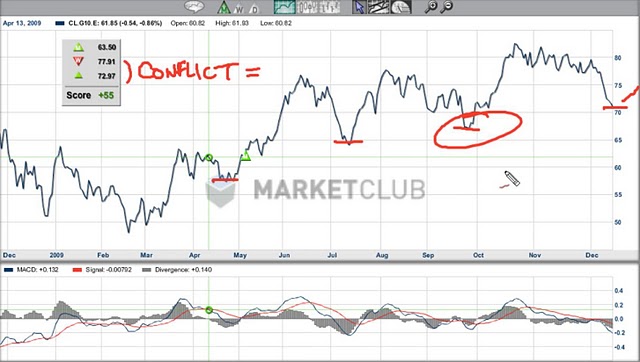
But the dollar is stronger for now, and below is a video analysis of a chart that bears out yet more possible gains from the greenback – at least in the short term. The chart also serves as a good example of why I am not a technician, and why I don't use charts for anything but confirmation of trends.

It seems to me, however, as though there are two very strong long-term forces threatening to send rates and prices higher:
1. Unprecedented printing and easing of credit.
2. A diminishing appetite for U.S. debt.
Let me ask you this: would you loan money to any entity at less than 5%, knowing the entity’s credit was bumping against its ceiling, and that its earning-power had been severely crippled? I know I wouldn't. But somebody has been buying Treasuries, and I think those "somebodies" are starting to realize just exactly how stupid that sort of behavior is.


Consider these comments Friday, 12/18/09, from Zhu Min, deputy governor of the People's Bank of China:
“The United States cannot force foreign governments to increase their holdings of Treasuries," Zhu said, according to an audio recording of his remarks. "Double the holdings? It is definitely impossible.”
"The US current account deficit is falling as residents' savings increase, so its trade turnover is falling, which means the US is supplying fewer dollars to the rest of the world," he added. "The world does not have so much money to buy more US Treasuries."
What if sovereign nations are slowly beginning to curtail their purchases of U.S. Treasuries? Might that not account for the rise we’ve seen in yields over the last year? “Man-of-the-year” Bernanke says he’s going to hold down the long-end of the yield curve, but that hasn’t been working so well for him; it’s hard to keep rates down when the global economy no longer wants your debt.


But let’s take it a step further: what if, say China, suddenly noticed that the U.S. government really isn’t all that credit worthy anymore. And what if about a year ago, China recognized that long-end prices were at historical highs, and yields were at historical lows. What would China likely do? Right. They’d slowly start selling – or at least start minimizing purchases. And what would happen to bond prices? They’d fall. And how about those yields? Yep. They’d start creeping up.

I know what you’re going to say: foreign nations hold only a relatively small percentage of U.S. debt. So what? That certainly doesn’t mean foreign nations are the only investors in the world who recognize what is happening to United States credit. Treasuries are not the safe-haven they once were. More often than not these days, they move in tandem with the stock market! What kind of behavior is that for the so-called “risk free rate of return?”
Here’s the part most people don’t think about, however: if foreigners are slowly cashing in U.S. bonds, what happens? Effectively, they sell bonds, and they buy dollars. And until they convert those dollars to some other asset – whether a currency or some commodity – the dollar will strengthen. But how long with these foreigners hold on to greenbacks? My guess is not long, and I’m willing to bet the recent dollar rally is going to be very ephemeral.


Just as investors have started to realize that Treasury yields and prices are unsustainable at these levels, they will soon realize that the dollar is no longer the store of value it once was either. It cannot sustain its status as the world’s currency reserve. With the massive amounts of debt the U.S. has piled up, along with the unprecedented number of dollars now printed and floating in the system, public perception of the dollar is about to change. And there may be one more surprise coming that most people aren't anticipating: it is very likely that many of the world's largest oil-producing countries may soon begin transacting in some currency other than the dollar.

Where to Invest Now?
Stocks? I continue to say absolutely not.
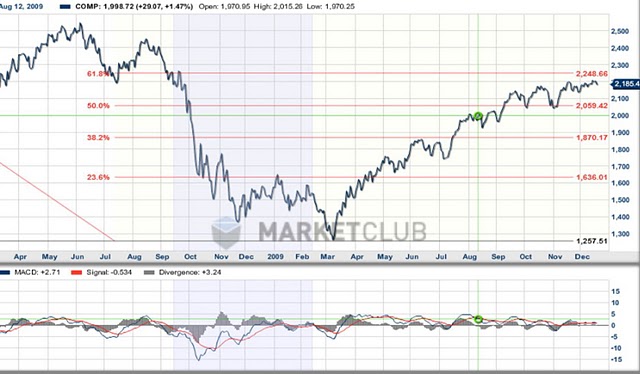
For over a year, I've argued that stocks would recover, and then trade sideways to down for a very long time. I've also suggested that there is a possibility that stocks might even continue to climb, but not until inflationary price pressure begins to accelerate.
My argument is that no matter what stocks do, they will fail to outperform general price increases deriving from inflation.

So if you believe the dollar is heading south, where do you put your money? Should you short the dollar? Or perhaps you should go long the euro? I don't think either is a good investment; most currencies in the world are going to lose value as governments print their way out of this mess. Even the Swiss -- traditionally the most fiscally responsible government on earth -- are getting on board.

I think the Euro could be a moderately good short- to medium-term trade. One of the euro's strengths is that the European Union doesn't issue debt (at least for now), and so its monetary policy isn't heavily reliant on that component -- the way U.S. is. At least from the debt perspective, the euro isn’t as affected by the debt component, and so the world may well shift away from the dollar to the euro as its global currency reserve.

Or maybe the Chinese will get their wish, and SDRs will replace the dollar. Who knows? And who cares? Any fiat currency that replaces the dollar is going to have just as many problems. Remember the European Union's currency printing presses are in high gear too – along with everyone else’s. The only thing that’s going to stop the pattern of violent economic gyrations we’ve seen in the last century is the decriminalization of private competing currencies, backed by commodities – most likely precious metals.

So if all fiat currencies are going to fall simultaneously, what will they be falling in relation to?
The answer to that is simple: commodities. And that's where I’m putting my money. I still believe
energy, agriculture, and metals are going to be sure winners; I’m especially bullish on silver right now, but when inflation really starts to hand us higher dollar-based prices, I think investor psychology will head toward gold because it is by far perceived as the most stable, long-term store of value in the world -- as it has been for thousands of years.
There are some people who believe gold and oil are going lower -- and by extension, that the dollar is going higher. I obviously disagree with that position -- as I said earlier -- before I expound, here are two bearish video counterarguments to my thoughts on
gold and oil, respectively.

Both gold and oil -- and especially gold -- have ridden out economic historical crises extremely well. They don't just keep up with inflation-driven prices -- they outpace them. As such, since there's no question in my mind that the
profligate global printing of currency and easing of credit are going to drive prices higher -- on an unimaginable scale. And while the above short-term outlooks may be useful in their capacities, my long-term outlook remains exceedingly bullish.

Disclosures: Paco is long TBT, UCO, and gold. He also holds U.S. dollars by necessity, pending the advent of private gold-backed currencies